Sciatica Pain Relief Guide – Causes, Symptoms & Best Treatments
Learn everything about sciatica pain, its causes, symptoms, and the best ways to relieve it using cold and hot therapy with practical daily tips.
Article Contents
- What is Sciatica?
- Causes of Sciatica
- Symptoms in Detail
- Cold or Hot Therapy?
- Best Ways to Relieve Pain
- When Should You Be Concerned?
- Frequently Asked Questions
What is Sciatica?
Sciatica is pain caused by irritation or compression of the sciatic nerve, the longest nerve in the body, which runs from the lower back through the hips and buttocks and down the leg.
Unlike ordinary lower back pain, sciatica is usually identified by pain that travels along the path of the nerve. It often affects only one side of the body and may feel sharp, burning, or accompanied by numbness or tingling, which can make daily movement more difficult and uncomfortable.
Causes of Sciatica
Sciatica can develop for several reasons, but the main cause is usually direct or indirect pressure on the sciatic nerve. Common causes include:
- Herniated disc: the most common cause, where a spinal disc presses on the nerve roots.
- Muscle tightness: especially the piriformis muscle, which may irritate or compress the nerve.
- Spinal stenosis: narrowing of the spinal canal that can place pressure on the nerves.
- Prolonged sitting: especially with poor posture and limited movement.
- Physical strain: or improper lifting that stresses the lower back.
Excess weight, weak core and back muscles, and lack of regular movement may also increase the likelihood of developing sciatica or make the symptoms worse.
Symptoms in Detail
Sciatica symptoms vary from person to person, but they commonly include one or more of the following:
- Radiating pain: starting in the lower back or buttock and extending into the leg.
- Numbness: in the leg or foot, either constant or intermittent.
- Tingling or burning: an uncomfortable nerve-related sensation.
- Muscle weakness: in some cases, making walking or standing more difficult.
- Pain that worsens when sitting: or with bending, sudden movement, or sometimes coughing.
In many cases, the pain appears on only one side of the body, which is one of the key features that helps distinguish sciatica from other types of back pain.
Cold or Hot Therapy for Sciatica?
Choosing the right therapy depends on the stage and nature of the pain, so cold and heat are not equally useful at every moment.
- Cold therapy: is usually used in the early stage of pain, especially during the first 24 to 48 hours, because it can help reduce inflammation and swelling while calming sharp pain.
- Hot therapy: is often more useful after the initial inflammation settles, as it helps relax muscles, improve blood circulation, and reduce tension around the painful area.
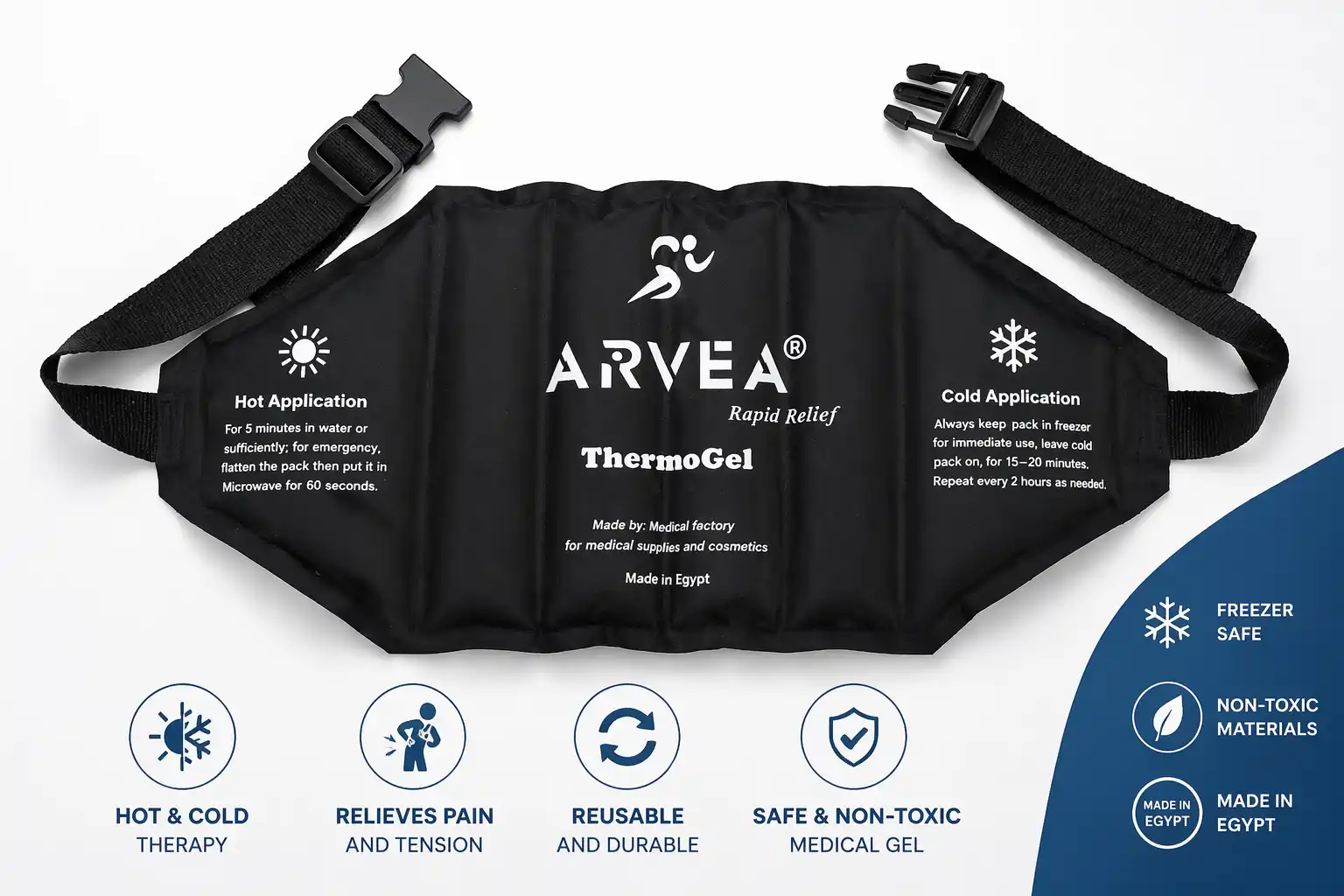
In some cases, alternating between cold and heat may be helpful depending on how the body responds. You can use Arvea cold and hot therapy products for practical and safe support when used properly.
Best Ways to Relieve Sciatica Pain
Relieving sciatica pain does not depend on therapy packs alone. It usually improves faster when combined with daily habits that reduce pressure on the nerve and improve movement:
- Stay active: avoid sitting for long periods, because prolonged stillness may make symptoms worse.
- Gentle stretching: may help reduce pressure on the nerve and improve muscle flexibility.
- Maintain proper sitting posture: with lower back support and less forward bending.
- Use support tools: such as wraps or gel packs when needed for comfort and pain relief.
- Sleep correctly: lying on your side with a pillow between the knees may help reduce back strain.
Avoiding sudden movements, gradually strengthening the back and core muscles, and maintaining a healthy body weight may also help reduce repeated episodes over time.
Combining these habits with cold and heat therapy can significantly reduce pain, speed up recovery, and improve the ability to return to normal daily activity.
When Should You Be Concerned?
Although many cases of sciatica improve with conservative care, some warning signs require prompt medical evaluation:
- Noticeable loss of sensation in the leg or foot
- Severe muscle weakness or difficulty walking normally
- Loss of bladder or bowel control
- Severe pain or pain that continues for weeks without improvement
If these symptoms appear, home care alone may not be enough, and medical advice is recommended to identify the cause and the most appropriate treatment plan.
This content is for educational purposes only and does not replace medical advice.
Frequently Asked Questions
What is the fastest way to relieve sciatica?
It depends on the cause, but relative rest, cold therapy in the early stage, followed by heat therapy later, along with light exercises, may help reduce pain faster.
Is walking good for sciatica?
Yes, light walking may help improve circulation and reduce stiffness, as long as it does not clearly worsen the pain.
Does sitting make it worse?
Yes, in many cases sciatica becomes worse with prolonged sitting because it increases pressure on the lower back and sciatic nerve.
How long does sciatica last?
Sciatica may last from a few days to several weeks depending on the cause, the severity of the condition, and how well the person follows treatment and supportive daily habits.
Can it heal completely?
Yes, many cases improve significantly or resolve completely without surgery, especially with early attention and the right treatment approach.